Apple Genetics, Grafting, and Fruit Production
Why You Can’t Plant a Pink Lady Apple: The Wild Science of Apple Genetics & Grafting
If you have ever finished a delicious crisp apple—say, a Pink Lady or a Granny Smith—and thought, "I’ll save these seeds, plant them in the garden, and have free apples for life," I have some bad news for you.
You will likely wait 7 to 10 years for that tree to fruit, and when it finally does, the apples will probably be small, sour, bitter, or mealy. They certainly won't be Pink Ladies.
Why? Because of a biological phenomenon called Extreme Heterozygosity.
Here is the science behind why every apple tree is a genetic individual, and how farmers use the ancient art of grafting to give us the fruit we love.
Part 1: The Genetic Lottery (Extreme Heterozygosity)
In the plant world, some crops breed "true-to-seed." If you plant a seed from a heirloom tomato, you get a plant that is almost identical to the parent.
Apples are different. The apple genome is incredibly complex (it actually has more genes than the human genome!). Apples are heterozygous, meaning their genetic makeup is a mix of disparate DNA from two different parents.
Think of it like human children. You and your partner might have a child, but that child is not a clone of you. They are a unique remix of your DNA. Now, imagine if you had 50 children. They would all look different—some tall, some short, some with blue eyes, some with brown.
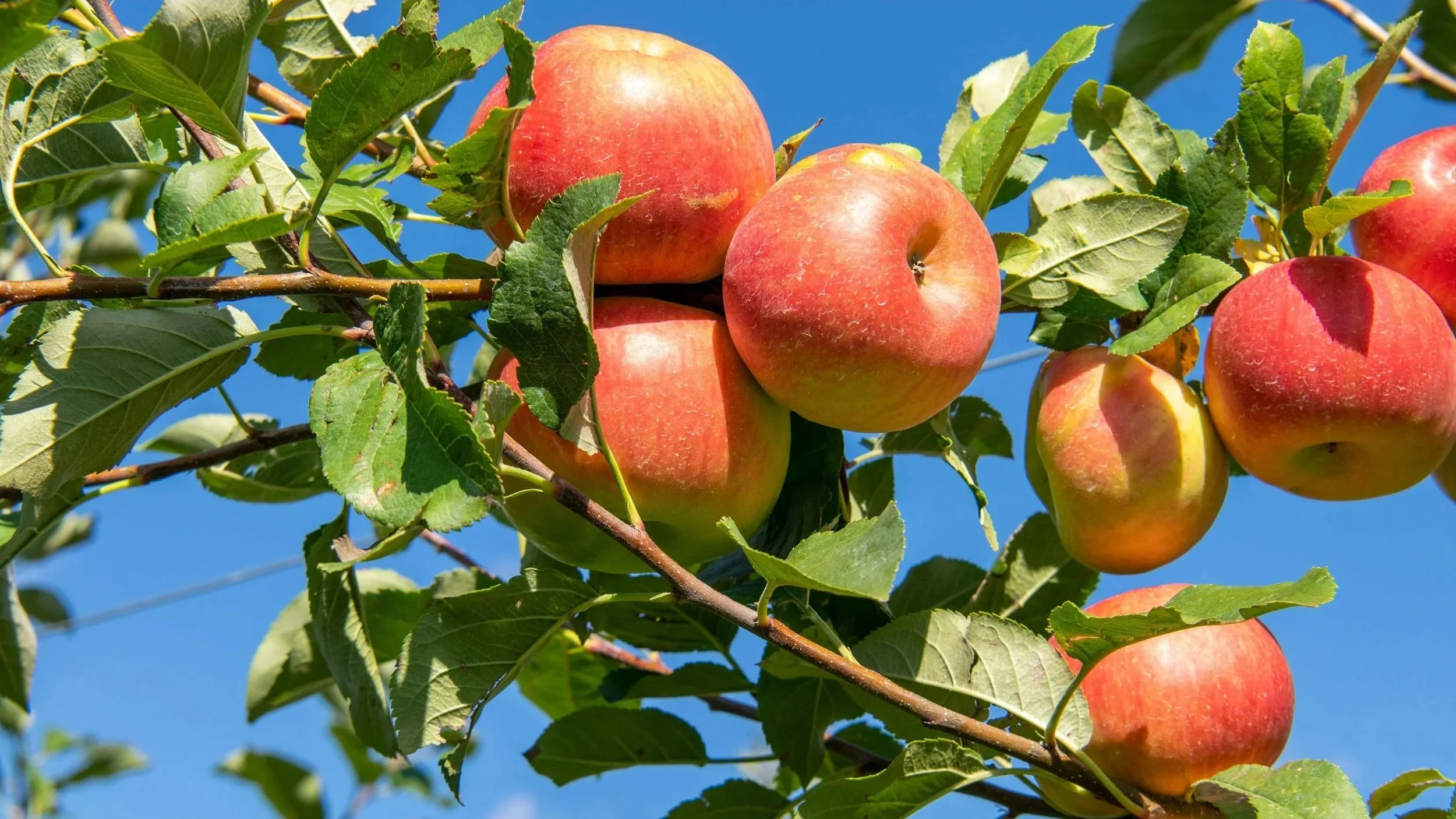
An apple fruit is the ovary of the tree. The seeds inside are the "children."
The Mother: The tree the fruit grew on.
The Father: The unknown tree that a bee visited before landing on the mother's blossom.
Every single seed in a single apple is a genetically unique individual. If you plant 10 seeds from one apple, you will get 10 completely different trees. Most of these "wild" apples (often called "pippins") revert to their wild ancestry—producing small, bitter fruit often used for cider but terrible for eating.
Part 2: Cloning Nature (The Art of Grafting)
So, if we can't plant seeds, how do we fill supermarkets with millions of identical Gala apples?
The answer is cloning. But not in a lab—in the field.
Every Granny Smith apple tree on earth is essentially a twig cut from the original Granny Smith tree (discovered by Maria Ann Smith in Australia in 1868) and kept alive for over 150 years.
To do this, we use Grafting.
Grafting is the horticultural version of a limb transplant. It involves physically joining two pieces of living plant tissue so they grow together and function as a single organism.
The Scion: This is a cutting (a twig) from the tree you want to replicate (e.g., the tasty apple). This will become the trunk, branches, and fruit.
The Rootstock: This is a tree that has been cut down to a stump. It provides the root system.
The most critical part of this process is aligning the cambium layers—the thin green ring just under the bark where active growth happens. If the cambium of the scion touches the cambium of the rootstock, the two will heal together, vascular channels will connect, and the scion will wake up and start growing, powered by the rootstock's water uptake.
Part 3: The Secret Power of Rootstocks
You might ask: "Why bother with a rootstock? Why not just stick the scion twig in the ground and let it grow its own roots?"
You could, but modern orchards rely on rootstocks for control.
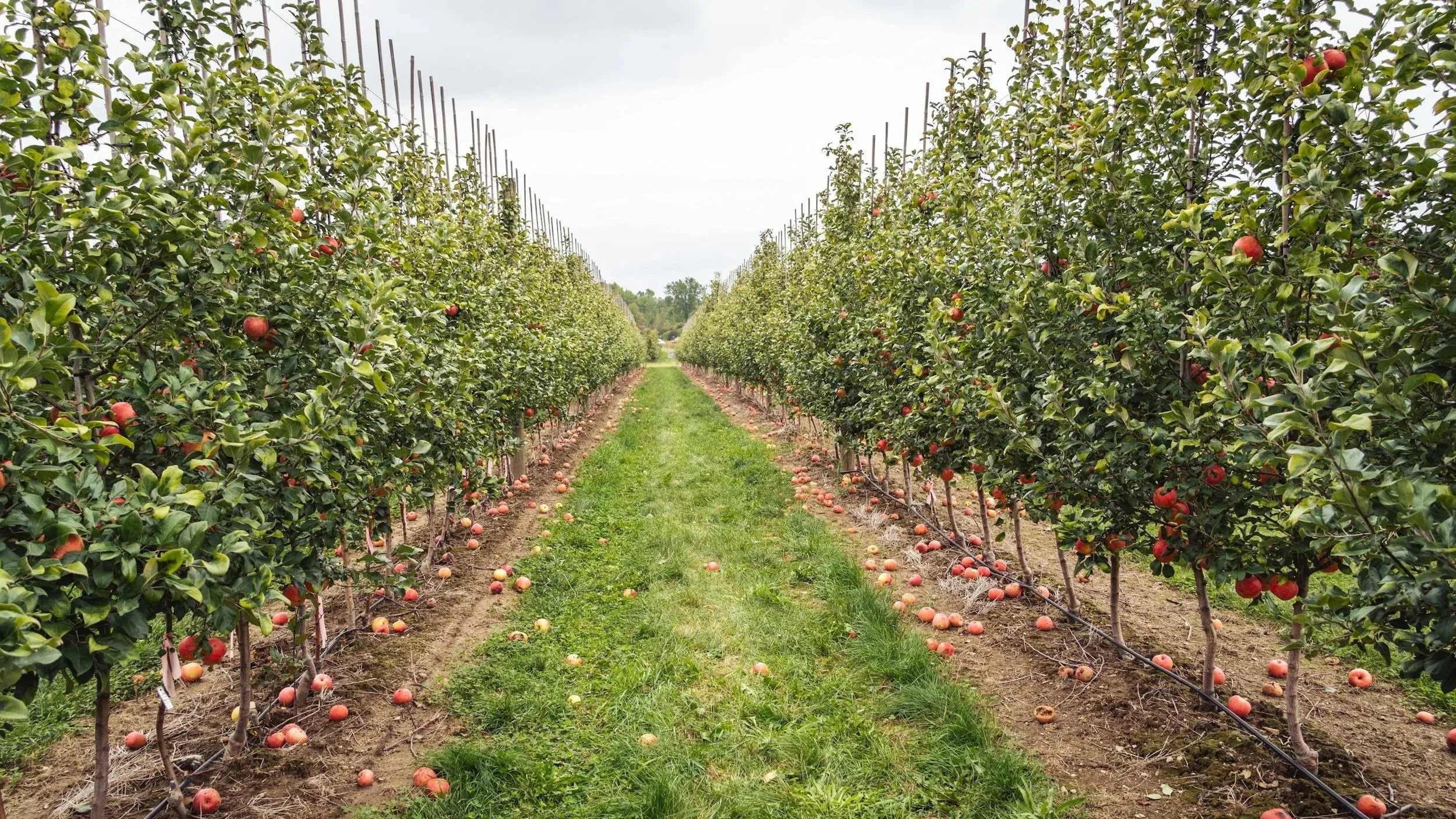
Left to its own devices, an apple tree grown on its own roots will become a "Standard" tree—growing 20 to 30 feet tall. This is massive. It’s hard to prune, dangerous to harvest, and takes up huge amounts of space.
Growers use specific rootstocks (often with unsexy names like M9, M26, or MM111) to program the tree's behavior. Rootstocks can:
Dwarf the tree: Keeping it under 8 feet tall so fruit can be picked by hand without ladders.
Induce early fruiting: Making the tree produce fruit in 2 years instead of 8.
Resist disease: Protecting the tree from soil-borne pests like Woolly Apple Aphid.
Summary: The Frankenstein Tree
Next time you walk through an orchard, look at the base of the tree trunks. You will likely see a knobbly scar or a "dog-leg" kink about 6 inches off the ground.
That scar is the graft union. Everything below it is a rootstock selected for toughness and size control. Everything above it is a scion, selected purely for delicious flavour. It is two different genetic organisms, fused together to create the perfect fruit.