A Guide to UK Cider Types
Hello there!
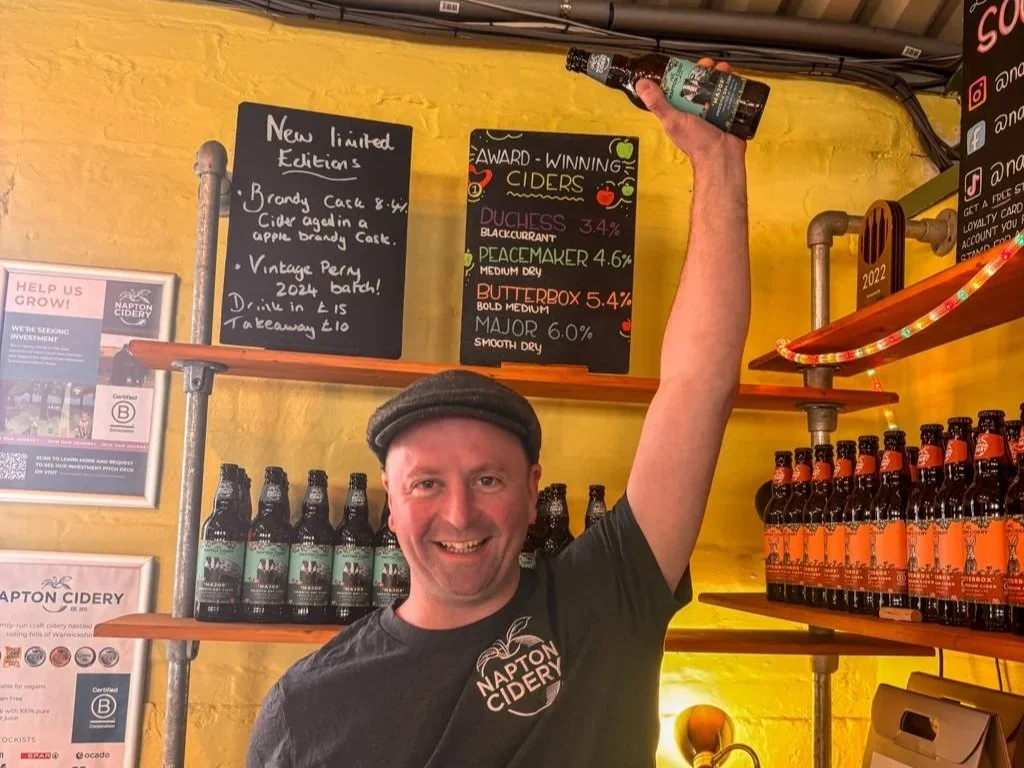
I’m Jolyon Olivier, head cider maker and co-founder of Napton Cidery.
If you’ve ever wandered into our taproom here in Warwickshire or caught me chatting at a festival, you’ll know I can talk about apples until the cows come home. But there is a good reason for that: Cider in the UK is going through a proper revolution. It’s no longer just about that industrial, fizzy yellow stuff or the rough-and-ready "scrumpy" that takes the enamel off your teeth.
Real British cider is about terroir, patience, and the incredible diversity of the apple. At Napton, we believe in "Blossom to Bottle"—using wild yeasts, slow fermentation, and 100% apple juice to create something honest.
Whether you're a seasoned drinker or just dipping your toe in, here is my guide to the different types of cider you’ll find across our brilliant islands.
1. West Country Style (The Tannin Giants)
When people think of "proper" traditional cider, this is usually what they picture. Hailing from counties like Somerset, Herefordshire, and Devon, these ciders are made using specific cider apples (varieties like Dabinett, Yarlington Mill, and Harry Masters Jersey).
The Profile: These apples are often inedible raw (spitters!) because they are full of tannins. But once fermented, those tannins provide body, mouthfeel, and that "drying" sensation on the gums, similar to a red wine.
The Taste: Bold, complex, and "farmyard-y" (in a good way!). You get deep notes of leather, spice, and cooked apple.
Jolyon’s Take: This is the heartland of cider. At Napton, we use Herefordshire cider apples for many of our blends because you just can't fake that depth of flavour.
2. Eastern Counties Style (The Acid-Led Crispness)
Head over to Kent, Sussex, and East Anglia, and the cider changes completely. Traditionally, they didn’t grow "cider apples" here; they grew culinary (cooking) and dessert (eating) apples for the London markets.
The Profile: Made from apples like Cox, Russet, or Bramley. These apples are low in tannin but high in acidity.
The Taste: These ciders are much lighter, cleaner, and sharper. They are often pale in colour and drink more like a crisp white wine (think Sauvignon Blanc).
Jolyon’s Take: A perfect entry point if you find West Country cider too "heavy." It’s refreshing, zesty, and cuts through fatty foods brilliantly.
3. "Real" Fruit Cider vs. Commercial Sweet
Now, this is where I get on my soapbox a bit. You’ve likely seen the neon-coloured "berry" ciders on supermarket shelves.
Commercial Fruit Cider: usually made from apple concentrate (boiled-down goo), mixed with water, sugar, and artificial fruit syrups. It’s sweet, fizzy, and often barely tastes of apple.
Real Fruit Cider: This is what we strive for. We take a solid base of real cider and blend it with pure fruit juices. For example, for our Duchess cider, we use real blackcurrant juice.
The Difference: You get the tartness and the aroma of the actual fruit, not just a sugar rush. It should still taste like cider!
The Taste: Delicate, floral, and often with a citrusy "zing." It contains sorbitol (a natural unfermentable sugar), so it usually retains a bit of natural sweetness and a creamy body.
4. Single Varietal (The Solo Artists)
Most ciders are blends—a mix of apples to balance sweet, sharp, and bitter. But sometimes, an apple is so good it deserves the stage to itself.
The Profile: Made from 100% of one type of apple.
Examples: Kingston Black is the "holy grail"—it has the perfect balance of sugar, acid, and tannin all on its own. Katy is another popular one—super light and strawberry-like.
Jolyon’s Take: These are fantastic for educating your palate. It lets you taste exactly what a specific apple brings to the party. We’ve done limited runs of these, and they always fly off the shelves.
5. Keeved Cider (The French Influence)
If you see a bottle described as "Keeved," buy it. It’s a very difficult, traditional artisan method (common in Normandy, France) that is gaining traction here in the craft scene.
The Process: We starve the yeast of nutrients naturally, which stops the fermentation before all the fruit sugar is turned into alcohol.
The Result: A naturally sweet, lower alcohol cider (often 3-4%) with a full, rich mouthfeel and fine natural bubbles. No sugar added—just pure apple sweetness.
6. Perry (The Pear Cousin)
I have to give a nod to Perry. Real Perry is not "Pear Cider."
"Pear Cider" is often apple cider with pear flavouring. Real Perry is made from specific Perry Pears (like the Blakeney Red or Thorn) grown largely in Gloucestershire and Herefordshire.
How to Drink It (According to Me)
Forget the pint glass filled with ice (which just dilutes the hard work!).
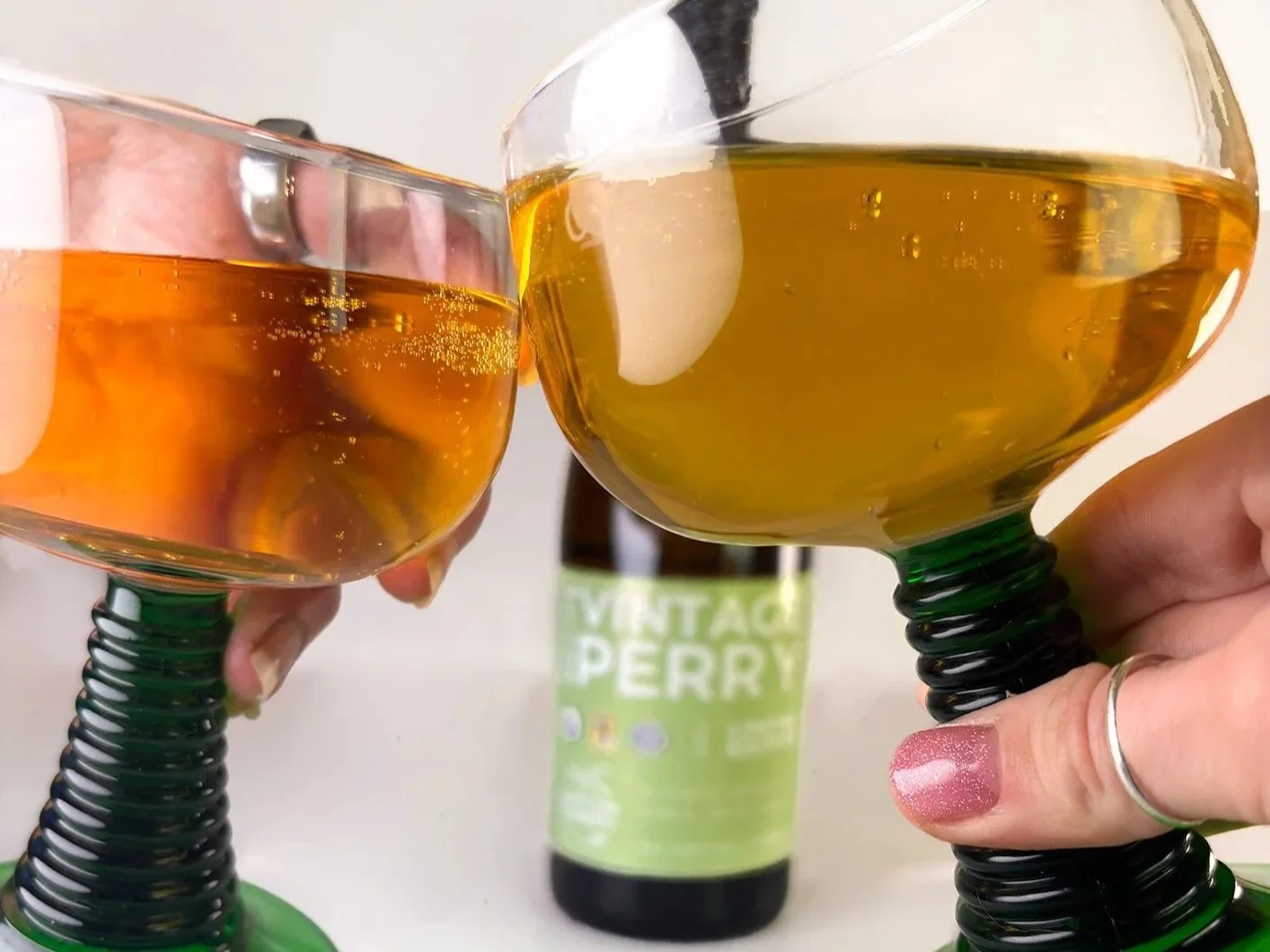
Chilled, not frozen: Serve it like a white wine.
Use a wine glass: It captures the aromas—cider is 80% smell!
Don't just drink it, own it: Ask where the apples came from. If the label says "Made in the UK" but doesn't mention the apples, be suspicious.
If you’re ever near Napton-on-the-Hill, pop into the cidery. We’ll pour you a glass of the good stuff and show you exactly what 100% juice tastes like.
Cheers!
Jolyon Olivier
Head Cider Maker, Napton Cidery